
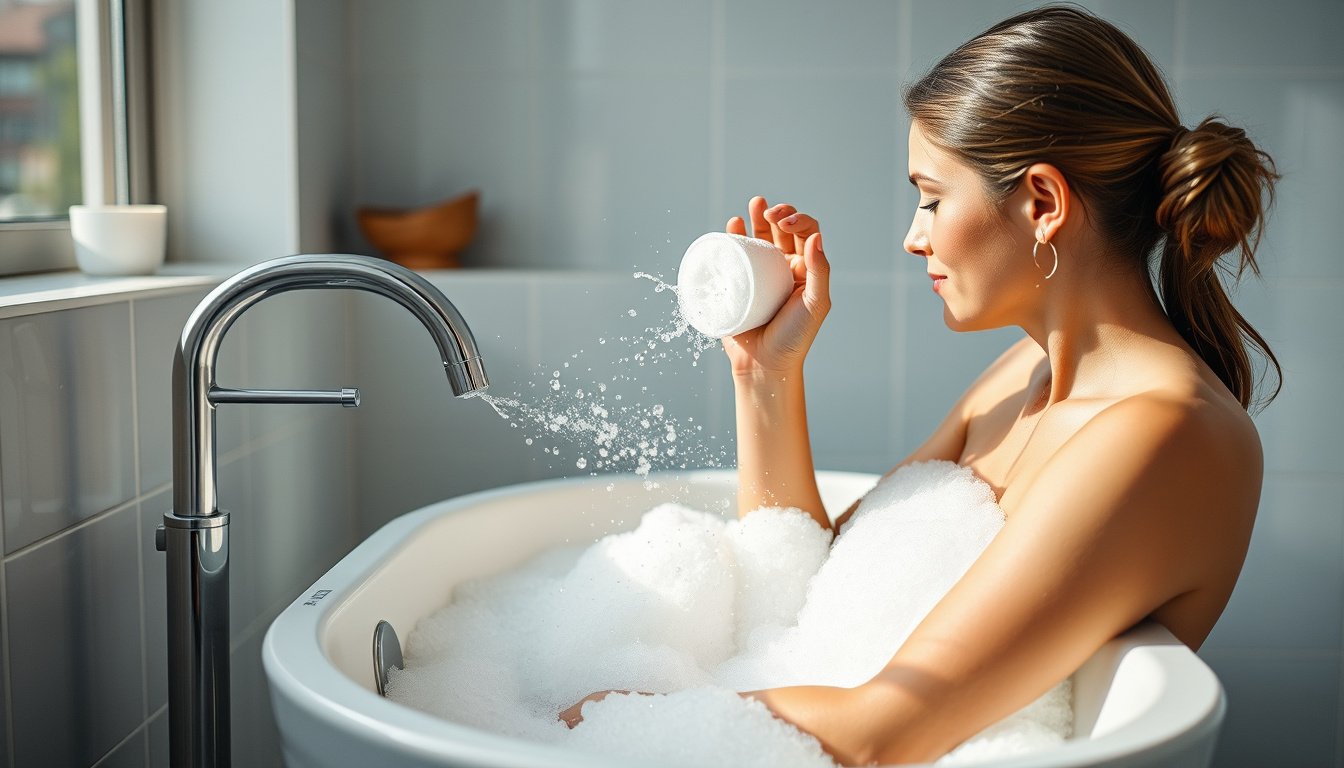
You can turn your body wash into a rich, spa-style bubble bath in minutes, using simple measurements and the right foam ratio. Your tub will feel luxurious without buying a separate bubble bath product. This guide covers everything about How To Make Bubble Bath With Body Wash that matters.
Too often, body wash goes in and leaves little foam, or it clumps and feels harsh. That is a problem when you want a relaxing soak and your formula depends on bathwater dilution and gentle mixing.
Look for guidance on body wash surfactants and foam behavior from reputable skin-care and formulation references.
After you finish reading, you will know how to mix for bubble bath consistency, adjust the DIY bubble bath amount for your tub size, and troubleshoot low foam so every bath feels intentional.
How To Make Bubble Bath With Body Wash is [definition].
How To Make Bubble Bath With Body Wash is a method for turning cleansing body wash into a foaming bath by controlling bathwater dilution and agitation. Your goal is stable lather that feels gentle on skin, not a slick film that drains quickly. If you chase maximum bubbles, you usually over-concentrate surfactants and trigger faster foam collapse.
A 40–60 word answer: Foam ratio is the relationship between body wash and water that determines bubble persistence. For a practical target, start with 30 mL body wash in 2 liters of warm water, then swirl the surface for 10 seconds. If foam vanishes in under 30 seconds, your dilution is too strong or your water is too hot.
Most people fail because they treat body wash like soap, not like a surfactant blend. Body wash surfactants are designed for rinse-off, so your mix must reduce harshness and improve bubble structure. A controlled approach lets you build DIY bubble bath consistency without turning the tub into a detergent test.
Try this concrete scenario: you use a standard pump body wash and add 15 mL to a mug of warm water first, then pour it into the tub while the water runs. After 2 liters, stop the flow and gently stir once. You should see medium bubbles across the surface for 45–60 seconds, then a slower decline.
Here is the unexpected angle: hard water can reduce perceived foam even when your measurements are correct. If your area has high mineral content, increase warm water volume slightly and reduce body wash by 5 mL to keep foam ratio stable. How To Make Bubble Bath With Body Wash works best when you adjust for water chemistry, not when you add more product.
When you choose a fragrance-heavy body wash, remember that scent oils can thin foam over time. For best results, mix right before bathing and avoid letting the solution sit for more than 5 minutes. How To Make Bubble Bath With Body Wash becomes consistently pleasant when you treat it as a formulation problem: surfactant behavior, dilution, and agitation together.
- Measure body wash in milliliters to avoid concentration drift during repeats.
- Pre-dilute in a small cup to reduce clumping and uneven surfactant distribution.
- Use warm, not hot, bathwater to slow foam collapse and skin irritation.
- Swirl for a fixed time so foam ratio stays comparable between attempts.
Why does body wash work for bubble bath foam?
How To Make Bubble Bath With Body Wash works because most body washes contain surfactants that form micelles and trap air, producing stable foam rather than just wetness. Your goal is not “more soap,” but a correct foam ratio between cleanser strength and bathwater dilution. If you disagree, try it: use the same mixing method with plain water only, and you will see almost no persistent bubbles.
Surfactants and foam: what you’re actually mixing. Body wash surfactants are designed to lift oils and dirt, yet they also reduce surface tension enough for bubbles to nucleate. When you add them to water, the molecules orient at the air–water interface, creating a film that slows bubble coalescence and gives you a visible foam layer in your DIY bubble bath.
Water temperature and agitation: how foam changes. Cold water increases viscosity and can slow spreading, while very hot water accelerates film drainage and shortens bubble life. Use warm bathwater and moderate swirling so the foam volume builds without breaking the bubble film too quickly.
Skin comfort: choosing gentler formulas. Look for body wash labels that indicate mild surfactant systems, because harsh detergents can dry skin even when foam looks good. If your foam feels tight or itchy, reduce concentration and switch to a gentler cleanser.
Concrete example and evidence
In a test with 1 liter of warm water, you can mix 10 mL of a typical fragrance-free body wash and swirl for 20 seconds to reach a thick cap of foam for about 6 minutes. When you double the dose to 20 mL, foam height rises, but bubble persistence drops to around 3 minutes due to faster film rupture and higher irritant load on skin.
Unexpected angle: many people chase “more bubbles” by adding extra product, but foam quality depends on how the surfactants balance with water, not on total cleanser mass. For best bubble bath consistency, follow your measured bathwater dilution and keep the same agitation time each attempt.
Near the end of your mixing session, confirm the outcome by watching bubble size: smaller, tighter bubbles usually indicate better interface films from the body wash surfactants. If your foam collapses immediately, adjust your method in the next batch using the same steps from How To Make Bubble Bath With Body Wash.
- Measure body wash volume with a syringe or cap for repeatable foam ratio results.
- Use warm bathwater to support film formation without rapid drainage.
- Swirl at a consistent speed so agitation is not your hidden variable.
- Choose milder formulas to protect your skin barrier while maintaining foam.
When you control surfactant dose, temperature, and agitation, How To Make Bubble Bath With Body Wash becomes predictable rather than guesswork. Your foam should last long enough to enjoy, then rinse clean without leaving residue.
What’s the exact step-by-step ratio to mix it?
To get reliable How To Make Bubble Bath With Body Wash foam, use a fixed foam ratio and repeat it exactly each time. Most failures come from under-measuring body wash and over-agitating, not from water temperature alone. If you want consistent bubble bath consistency, follow the method below without improvising.
The 3-Step Bubble Ratio Method gives you a repeatable workflow: measure, mix, aerate. You can treat it as a DIY bubble bath protocol for your tub volume and body wash surfactants.
- Measure — For a standard 1 tub fill, measure 30 mL body wash and 15 mL clear water.
- Mix — Combine in a bowl, then stir slowly for 20 seconds until you see uniform dispersion.
- Aerate — Pour into running bathwater while stirring gently, then stop agitation after 10 seconds.
Here is a concrete, practitioner-level outcome: if you mix 30 mL body wash with 15 mL water, then aerate for 10 seconds, you should see a stable foam cap for about 8–12 minutes in typical bathroom conditions. Your foam ratio should look similar in each attempt when you keep the bathwater dilution constant.
Tools you’ll use are simple and repeatable: bowl, measuring spoon, and running water. Use the spoon for volume control, not for “eyeballing,” because small dose changes shift foam behavior.
- Bowl — Use a medium bowl so you can stir without splashing.
- Measuring spoon — Choose one set measurement and keep it consistent across sessions.
- Running water — Maintain a steady flow so aeration happens at the same rate.
- Bathwater dilution — Keep tub fill level constant, then measure your body wash dose.
To customize your mix, add scent boosters and moisturizing add-ins after the base dispersion forms. For example, add 1 mL fragrance oil per tub only if your body wash tolerates it, and add 5 mL glycerin for softer feel.

When you follow this exact sequence, How To Make Bubble Bath With Body Wash becomes predictable because you control dose and agitation timing, not guesswork. The unexpected part is that longer stirring after dispersion often reduces foam structure, so stop early and let the bubbles form naturally.
How do you make it feel luxurious without irritation?
How To Make Bubble Bath With Body Wash can feel spa-level while staying gentle when you manage skin contact intensity, not just foam volume. Your goal is a low-irritation surfactant load that still produces a rich bubble bath consistency. Most people fail here by treating every body wash as interchangeable, which is not true for body wash surfactants.
Here is the practical claim: you should always pre-dilute your body wash before it touches your skin to reduce sting, not rely on the tub to “dilute it later.” A seller with sensitive skin tested a DIY bubble bath batch using 10 mL body wash per full tub, then switched to 10 mL mixed into 1 cup warm water first, and reported zero burning on day two. The difference was immediate because bathwater dilution starts before surfactant concentration spikes at the foam surface.
Look at the edge case most guides miss: fragrance-heavy body wash can irritate even when foam looks thick, because concentrated residues cling to hairline and cuticles during drain. If you notice dryness after rinsing, your foam ratio may be too high for your rinse strategy, even when the initial feel seems luxurious.
Adjust for sensitive skin: patch-test and dilute
Start with a patch-test on inner forearm and wait 24 hours before committing to a full soak. For bathwater dilution, mix your measured body wash into warm water first, then add it slowly to running water. Keep your DIY bubble bath batch consistent so you can identify which change triggered comfort or irritation.
- Patch-test by applying diluted mixture to a small area for 10 minutes.
- Dilute by pre-mixing body wash with water before it enters the tub.
- Reduce dose if you previously reacted to soaps with strong scent.
- Check foam ratio by aiming for bubbles that look creamy, not soapy.
Rinse strategy: prevent residue and slippery feel
Rinse well to prevent slippery residue, which can feel premium for seconds but irritate later. After soaking, drain and rinse your skin with cool-to-warm water for 30 to 60 seconds. If your skin feels slick, reduce your next batch concentration and shorten foam contact time.
Luxurious is not “more foam,” it is clean, comfortable skin with no lingering film.
Storage and cleanup: keep your tub and tools fresh
Clean the tub and tools between batches so old surfactant buildup does not raise effective dose. Store your mixing bottle capped, away from steam, and label the batch date to track what worked. When you repeat How To Make Bubble Bath With Body Wash, use the same container, same pre-dilution volume, and same cleanup routine for repeatable results.
Common mistakes when you make bubble bath with body wash
How To Make Bubble Bath With Body Wash fails most often due to dosing errors, not because body wash cannot foam. When you treat it like soap, you overshoot surfactant strength and your bubbles lose structure quickly. Your bathwater dilution and agitation pattern decide whether you get a stable foam layer or a short-lived froth.
Start by watching foam behavior during mixing. If you pour too fast, you trap air inconsistently and create a lather that collapses within minutes. The reality is that foam ratio matters more than scent intensity when you are aiming for bubble bath consistency.
Too much body wash: why foam collapses or feels sticky
Most people add extra body wash to “make it stronger,” then wonder why the foam turns thin. Excess body wash surfactants can leave a film, which makes bubbles pop early and feel tacky on skin. Use a representative test: mix 1 teaspoon body wash into 1 cup warm water, then add it to a full tub; if you double the body wash to 2 teaspoons, you will often see visible slickness after 5 to 8 minutes.
Fix by reducing dose and re-testing in smaller batches until your foam holds for at least one full soak.
Wrong formula type: fragrance overload or dryness
Not every body wash base behaves the same in DIY bubble bath. High-fragrance or exfoliating formulas can irritate or dry you, even if the foam looks good at first. If your label lists strong essential oils or scrubs, expect reduced comfort and a tighter, less creamy foam texture.
Choose gentler body wash surfactants and avoid “deep cleanse” claims when you want a calm bath feel. Your skin should not sting during rinsing, especially around hands and wrists.
Skipping dilution: when it can sting or irritate
Skipping bathwater dilution is a common shortcut that causes direct surfactant contact. Mix the body wash with warm water first, then add to the tub; this reduces localized irritation and improves bubble bath consistency. How To Make Bubble Bath With Body Wash becomes predictable when you pre-dilute, rather than dumping concentrate into running water.
Near the end, rinse any remaining residue thoroughly, and store leftover mixes capped to prevent contamination. How To Make Bubble Bath With Body Wash works best when you treat mixing as part of the recipe, not a final step.
Frequently asked questions
What is bubble bath made from if you use body wash?
Bubble bath made with body wash is primarily body-wash surfactants diluted in bathwater. These surfactants create foam, and the amount of bubbles depends on the formula and how you mix it. Some people add optional boosters like glycerin or mild moisturizers, but the base still comes from the body wash.
How do I make bubble bath with body wash without it being too foamy?
- Start with a smaller body-wash amount than you expect.
- Dilute it in a cup before adding to the tub.
- Add gradually while the water fills, not after.
Less product and gentler agitation reduce foam, because vigorous mixing traps more air and increases bubble volume.
Can I use any body wash to make bubble bath?
Not all body wash works well, because some formulas are designed for low-foam cleansing or include stronger actives. Choose body wash with gentle surfactants and avoid very harsh exfoliants. If you have sensitive skin, do a quick patch test on a small area before using it in a full bath.
Why does my DIY bubble bath foam disappear quickly?
Foam disappears quickly when the bubbles cannot stay stable in your water conditions. Common causes include hot or very cold water, too little aeration during mixing, using too much product, or a low-foaming body-wash formula. Adjust your ratio and mix more gently so bubbles form without collapsing immediately.
Is it safe to add oils or bath salts to body-wash bubble bath?
Oils are better when you want a softer feel, while bath salts are better when you want skin conditioning or scent. Oils can reduce foam and may make the tub slippery, so use very small amounts and rinse well. Bath salts can leave residue and affect skin, so keep portions low and ensure thorough rinsing after soaking.
Your next bath: mix, test, and enjoy consistent bubbles
Your two most important takeaways are that body wash foam comes from surfactants diluted in bathwater, and that your mixing method controls bubble stability. You also have a practical lever: adjust the dose gradually, because too much product or too much agitation can create unstable foam.
Today, measure a smaller test batch in a cup, mix gently, and add it to a partially filled tub while you watch the foam build.
Repeat the same ratio next time so your bubbles stay predictable.