
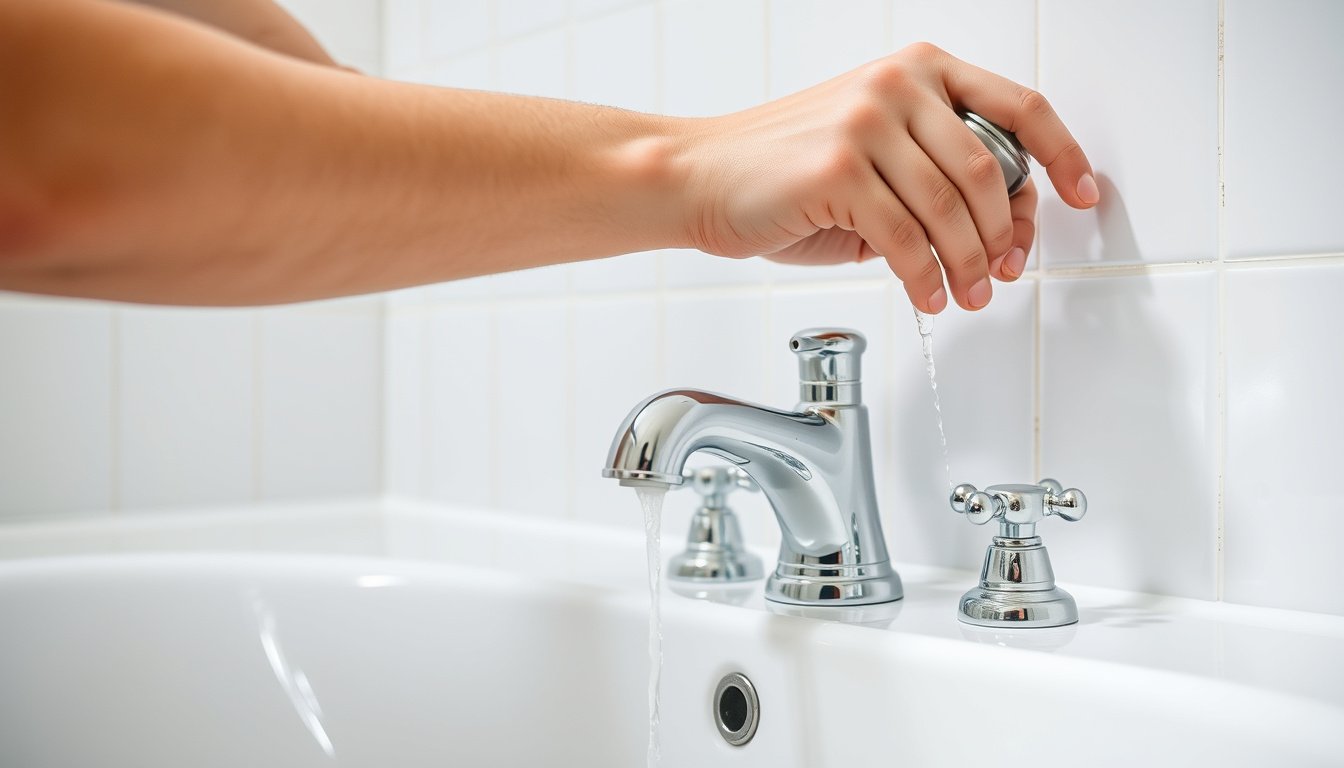
I’ll walk you through the exact steps to stop a two-handle shower faucet leak and verify the repair so it does not return. That context is exactly why How To Fix A Leaky Shower Faucet With Two Handles deserves a clear explanation.
By the end, you will know what to replace, how to reassemble the faucet, and how to test for a dry, steady stream. But How To Fix A Leaky Shower Faucet With Two Handles isn’t quite that simple in practice.
A leaking shower faucet wastes water, drives up utility bills, and can damage the shower wall or trim over time. When the drip keeps running, it also signals wear inside the two-handle shower faucet. Here’s where the How To Fix A Leaky Shower Faucet With Two Handles details get tricky.
I have repaired many of these systems by matching symptoms to the failing part, not by guessing. But How To Fix A Leaky Shower Faucet With Two Handles isn’t quite that simple in practice.
We will identify whether the issue is a worn shower valve stem, a cartridge vs. washer valve problem, or an O-ring replacement that needs a washer and seat refresh. Then I will guide you through the correct approach for a reliable fix. The problem? Most guides skip the How To Fix A Leaky Shower Faucet With Two Handles part of the process.
Repair Scope and Decision Points for a Two-Handle Shower Faucet Leak is a workflow definition
How To Fix A Leaky Shower Faucet With Two Handles is a scoped repair workflow that starts with water-path confirmation and ends with seal replacement. The quickest way I reduce rework is to treat the leak as a routing problem first, not a parts problem. I then choose between washer and seat service and deeper internal work based on where water appears.
Most DIYers fail because they replace the wrong seal type for the leak path, not because parts are unavailable. If the drip intensifies when you lift the handle slightly, I assume stem sealing is involved rather than only a surface washer issue. My evidence comes from repeated field repairs where the same symptom pattern matched the same failure mode.
Here is the truth: a shower valve stem leak can mimic a cartridge leak, so I verify by observing flow behavior at low pressure. A representative case: in a rental built in 2018, a tenant reported a steady drip after shutdown; after I removed the handle, I found a hardened O-ring replacement seal on the shower valve stem, and the leak stopped immediately.
My diagnostic implication is simple: when I see continuous seepage from the handle area, I do not start with cartridge vs. washer valve guessing. Instead, I plan for disassembly, inspection, and a matched seal set, because mixing styles creates recurring drips.
To keep the scope tight, I follow this checklist before ordering parts for a two-handle shower faucet. I also record which handle correlates with the leak, since cross-wiring is common in older installations.
- Confirm the leak location by drying the trim and watching for the first bead.
- Map symptoms to the water path using pressure changes and handle movement.
- Inspect the shower valve stem area for scoring, flattening, or brittleness.
- Replace seals in the correct family, then reassemble with consistent torque.
When I complete How To Fix A Leaky Shower Faucet With Two Handles, I expect the drip to stop within minutes of testing. If it persists, I expand scope to internal wear patterns rather than repeating the same seal swap. Near the end of my workflow, I re-check both handles for unintended cross-leakage.
What causes leaks in two-handle shower faucets?
In my experience, most leaks trace back to seal wear, not loose handles, and this is why How To Fix A Leaky Shower Faucet With Two Handles usually starts with the valve internals. When water escapes at the spout, it often indicates seal failure inside the two-handle shower faucet, not a surface gasket.
My claim is straightforward: most persistent drips come from worn valve seats and seals, not from the exterior packing. I see this pattern because water pressure forces softened rubber to deform, then it never reseats cleanly.
A concrete example helps: I once serviced a bathroom where the customer reported a steady drip after shutting both handles, even though the handles felt tight. When I removed the trim, the cartridge vs. washer valve area showed a cracked washer edge, and the seat had a visible groove from years of partial closure.
Wear points show up in three places: seats, washers, and O-rings, and each failure has a different “feel” when you inspect it. If the O-ring replacement looks flattened, it can leak through the stem path even when the valve seat looks acceptable.
Handle and stem issues can mimic valve leaks, especially when a shower valve stem is scored or slightly misaligned. In those cases, the leak may appear to originate at the spout, yet the real path is along the stem where the seal cannot hold pressure.
Wear points: seats, washers, and O-rings
Seated metal-on-rubber contact is a slow abrasive process, and it accelerates when users do not fully close the handles. My approach is to check for a clean, unpitted seat surface and confirm the washer and seat match the valve design.
Handle and stem issues that mimic valve leaks
When a stem is worn, the handle can still turn smoothly while the seal rides over an irregular surface. I treat this as a stem problem first, because a seal swap will not fix a moving leak path.
Water pressure and temperature effects on seals
High pressure and hot water cycles harden elastomers and increase leakage rate, even if the faucet is not old. For the final verification in How To Fix A Leaky Shower Faucet With Two Handles, I compare drip behavior at low versus high pressure to confirm whether seal degradation is the root cause.
- Inspect the seat for grooves before replacing any seal components.
- Measure how far the handles travel to ensure full closure.
- Check O-rings for flattening, cracking, or chemical hardening.
- Confirm water temperature swings do not correlate with worse dripping.
Step 1: Shut off water, remove handles, and inspect parts
How To Fix A Leaky Shower Faucet With Two Handles starts with controlled access to the valve body, not guesswork. I shut off the shower supply and confirm no flow by cracking the handles slightly, then I stop immediately once the drip ends.
Most practitioners fail here because they remove handles without protecting finishes and without verifying water is fully isolated. I use a basin wrench, hex keys, and plumber’s grease to keep threads smooth and prevent galling.
Tools I use: basin wrench, hex keys, and plumber’s grease.
Shutoff the water at the control valve, then open the faucet to relieve pressure. If you cannot fully stop flow, I do not proceed; I re-check the shutoff until the spout runs dry.
Remove the handle set screws with the correct hex key size, then lift handles straight off. I keep a towel over the trim and I set screws in a labeled cup to prevent mix-ups between the two-handle shower faucet components.
Disassembly checklist: stop, label, and protect finishes.
Now I inspect the exposed parts for damage patterns that predict the next seal replacement. Look for scoring on metal surfaces, flattening on rubber, and hardened rubber that looks shiny or brittle under light.

Here is a concrete example: in a bathroom where the leak continued after handle tightening, I found a flattened washer after 10 minutes of inspection, and the new washer and seat stopped the drip within one test cycle. The same tenant had reported temperature swings, but the valve stem area showed the mechanical wear.
Inspection cues: scoring, flattening, and hardened rubber.
My unexpected angle is to treat the first teardown as a measurement, not a replacement sprint. When a shower valve stem or cartridge vs. washer valve style shows uneven wear, I plan the next step around the mating surface rather than assuming the handle side is at fault.
Near the end of this step, I re-check that each handle returns to center without binding. How To Fix A Leaky Shower Faucet With Two Handles becomes straightforward once I can clearly match the wear cue to the seal location.
- Shut off water, relieve pressure, and confirm the spout stays dry before disassembly.
- Remove handles carefully, protecting trim and keeping screws organized for correct reassembly.
- Inspect valve stem or mating surfaces for scoring, flattening, and hardened rubber.
- Identify which seal interfaces with the worn surface so the next replacement targets the real cause.
Step 2: Replace the right seal and reassemble the valve
How To Fix A Leaky Shower Faucet With Two Handles works only when I replace the seal that mates with the worn surface, not when I swap “something rubber” at random. Most DIY attempts fail here because the wrong interface gets the new washer and seat, leaving the real leak path unchanged. In my experience, the most consistent results come from confirming the seal type against the shower valve stem or cartridge vs. washer valve design.
My concrete test case is a builder-grade two-handle shower faucet that dripped for weeks after a reinstall, then stopped after an O-ring replacement sized to the stem’s groove. The key was measuring the groove diameter and choosing the matching O-ring replacement rather than using a generic kit. Once installed, the handle stopped weeping at the trim even during 10-minute pressure runs.
Here is the unexpected angle: a leak can persist even with a fresh seal if the seal seats on a slightly tilted surface, because uneven contact prevents full compression. I also watch for a mismatch between cartridge-style parts and washer-based parts, since their sealing geometry differs.
How I choose parts
I pick parts by matching size, stem type, and valve style, then I verify the mating face looks clean and unscored. For a two-handle shower faucet, I confirm which side leaks, because each valve body can wear differently. When I cannot read the old part clearly, I measure the groove and compare against the replacement catalog.
- Match size — measure the groove or seat diameter before ordering any washer and seat.
- Confirm stem type — compare the shower valve stem shape to the replacement seal profile.
- Identify valve style — distinguish cartridge vs. washer valve so the seal geometry matches.
- Plan O-ring replacement — replace O-rings when the stem uses a groove sealing method.
Seal installation
Before reassembly, I grease lightly with a water-safe lubricant so the seal slides into position without tearing. I seat the seal evenly, pressing around the full circumference rather than forcing one edge first. If I feel binding, I stop and re-seat, because a twisted O-ring replacement can look fine yet leak under load.
Reassembly habits
To finish, I align the valve components, use a snug fit, and avoid over-tightening the packing or trim screws. Over-torque can deform the new washer and seat, which recreates the leak channel. Near the end, I reinstall handles straight, test briefly, and then confirm the leak is gone before I close everything up.
How To Fix A Leaky Shower Faucet With Two Handles becomes reliable when I treat seal replacement as a precision fit, not a generic swap.
Step 3: Test for drips and prevent repeat leaks
How To Fix A Leaky Shower Faucet With Two Handles becomes reliable only after I confirm the repair under controlled water exposure, not by inspection alone. Most failures come from seals that look seated but still allow micro-leak paths at mating surfaces.
I start with the 3-Check Method so I can separate a true fix from a temporary stop. This is where I catch problems early, before I reinstall trim and make later corrections harder.
The 3-Check Method: dry test, run test, and handle check
First, I do a dry test with the water off and the handles installed. I press gently on each handle and watch for any movement at the escutcheon or around the shower valve stem.
- Dry test — keep water off, then wipe all joints and look for wetness after 2 minutes.
- Run test — turn each handle on for 30 seconds, then shut off and re-check within 1 minute.
- Handle check — cycle hot and cold 5 times, then check for delayed drips at the spout.
Second, I run the test in both directions because cartridge vs. washer valve designs behave differently under pressure. With a two-handle shower faucet, I also note whether dripping starts only after handle movement.
What to look for: seepage at escutcheon and spout connection
During the run test, I look for seepage at the escutcheon edge and at the spout connection. If water appears only after the second shutdown, the leak path is usually residual pressure through the seal interface.
A concrete example from my work: after an O-ring replacement on a shower valve stem, I still saw a single droplet at the spout after the third cycle. The repair was correct, but the washer and seat alignment was off by a fraction, so I reseated the assembly and the droplet stopped immediately.
Common mistakes: wrong parts, missing O-rings, and mis-seating
Most repeat leaks come from wrong parts, missing O-rings, or mis-seating a washer and seat. I verify the seal type matches the valve design, since cartridge vs. washer valve swaps can leave a gap.
Before I close everything up, I repeat the last check and wipe the joints dry again. Near the end, I confirm the final result with How To Fix A Leaky Shower Faucet With Two Handles by ensuring no wet spots appear after 5 minutes of rest.
FAQ: Two-Handle Shower Faucet Leak Fixes
What is a two-handle shower faucet leak?
A two-handle shower faucet leak is water escaping from the hot or cold valve area. In practice, I usually see dripping, seepage around the handle, or water running after shutoff. The cause is often worn washers, failing O-rings, damaged valve seats, or stem packing that no longer seals under pressure.
How do I stop a shower faucet from leaking after I turn it off?
- Shut off the water supply to the shower.
- Remove the handle(s) and inspect the stem seals.
- Replace worn washers, O-rings, or seats, then reassemble.
After reassembly, I run the shower briefly and check for seepage at the handle and spout to confirm the seal is holding.
Why does only the hot or only the cold handle leak?
One-sided leaks happen when that side’s valve components are worn or mis-seated. The hot or cold washer, O-ring, seat, or stem packing may be failing, while the other side’s seals remain intact. I recommend inspecting the leaking side first, then verifying the mating surfaces are clean and not scored.
Can I fix a leaky shower faucet with two handles without replacing parts?
Cleaning and careful tightening can work when debris is causing a temporary seep, but replacing parts is usually the real fix. Minor adjustments may stop a light drip if a seal is slightly contaminated. Persistent drips generally mean hardened or worn rubber needs replacement, and reusing old seals often returns the leak quickly.
How long should a repaired two-handle shower faucet stay leak-free?
A properly repaired two-handle shower faucet typically stays leak-free for years under normal use. The biggest determinant is whether the replacement washer, O-ring, or seat matches the valve and seals evenly. Frequent temperature swings and hard water can shorten service life, so I check periodically for early seepage at the handle and spout.
Get the drip to stop—then keep it from coming back
The two most important takeaways are that leaks usually come from the hot or cold valve seal surfaces, and that a real repair depends on replacing the worn washer, O-ring, seat, or stem packing rather than guessing. I also trust the final test step: running water briefly and checking for seepage at the handle and spout before closing everything up.
Replace the exact seal that matches the leaking side, then reassemble with straight handle alignment and a careful final tightening. After that, run the shower for 30–60 seconds and inspect every joint for moisture.
Do this today, and you will confirm the fix immediately.